Safety Boat FAQs
-
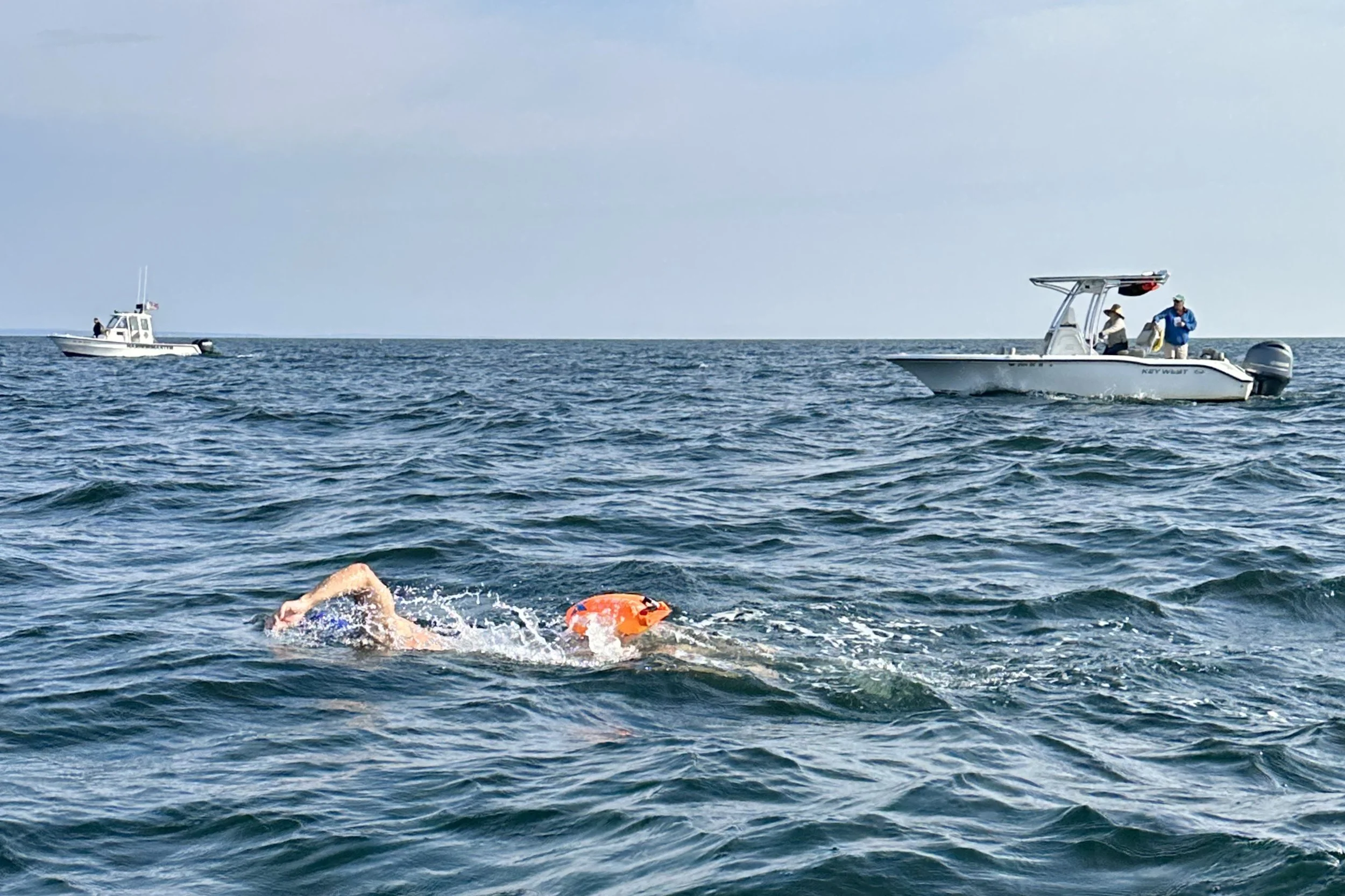
In marathon swimming (typically defined as any distance over 10km), the pilot boat is not just a ride—it is the swimmer's lifeline, navigator, and tactical commander. The pilot is responsible for the swimmer’s life, while the boat acts as a floating shield against the environment.
The primary role is protection and navigation. The pilot ensures the swimmer stays on the most efficient course while maintaining a "safety buffer" between the swimmer and other maritime traffic, debris, or marine life.
-
Usually, the boat stays to the side of the swimmer (roughly 3–5 meters away). The swimmer typically breathes toward the boat to maintain visual contact with the crew. The pilot must ensure the swimmer is never behind the boat (exhaust fumes/propeller risk) or too far ahead (loss of visual).
-
Generally, no. Leading from the front creates a "drafting" advantage, which is illegal in unassisted marathon swimming. The boat stays parallel to the swimmer.
-
How does the pilot handle tides and currents?
This is the "art" of piloting. A pilot doesn't just aim for the finish line; they calculate a vector. If a strong current is pushing south, the pilot will aim the boat north of the target so the swimmer "crabs" into the finish.
What tools are used for course setting?
Pilots use GPS chartplotters, AIS (Automatic Identification System) to track large ships, and depth sounders. In night swims, they use low-intensity glow sticks on the boat and the swimmer's goggles to maintain the line.
-
Traffic: The boat uses its radar and radio (VHF) to warn nearby tankers or speedboats that a "diver/swimmer in water" is present.
Wildlife: Pilots monitor for jellyfish blooms or shark activity.
Weather: The pilot has the final authority to pull a swimmer if the "Sea State" becomes dangerous (e.g., gale force winds or lightning).
-
How are "feeds" (food/hydration) handled without the swimmer touching the boat?
Per marathon rules, the swimmer cannot touch the boat or any person during the swim. Feeds are delivered via a "feed pole" (a long stick with a cup holder) or a "toss line" (a bottle attached to a rope). The swimmer grabs the bottle, drinks while treading water, and tosses it back.
What is the crew’s role during a feeding stop?
Efficiency is key. Every second the swimmer stops to eat, they are drifting with the current. The crew must:
Alert the captain that the swimmer is due for a feeding
Signal to the swimmer using agreed-upon method.
Monitor the swimmer's cognitive state (Are they slurring? Are they shivering?).
Provide technical feedback (stroke rate, distance to go) to keep the swimmer’s morale high.
-
The crew watches for a drop in stroke rate. If a swimmer’s strokes per minute (SPM) drop significantly or they become combative/confused, the pilot and observer may terminate the swim for safety.